Terms and Conditions are a vital way to make sure both you and your customers understand your legal relationship, avoiding unnecessary conflict and dispute. In principle, terms and conditions are legally binding on both sides and a court will enforce them. The main exceptions are if the customer didn't meaningfully agree to them, or if they contain a particular condition that is unenforceable even if somebody agrees to it. Here's what you need to know and do.
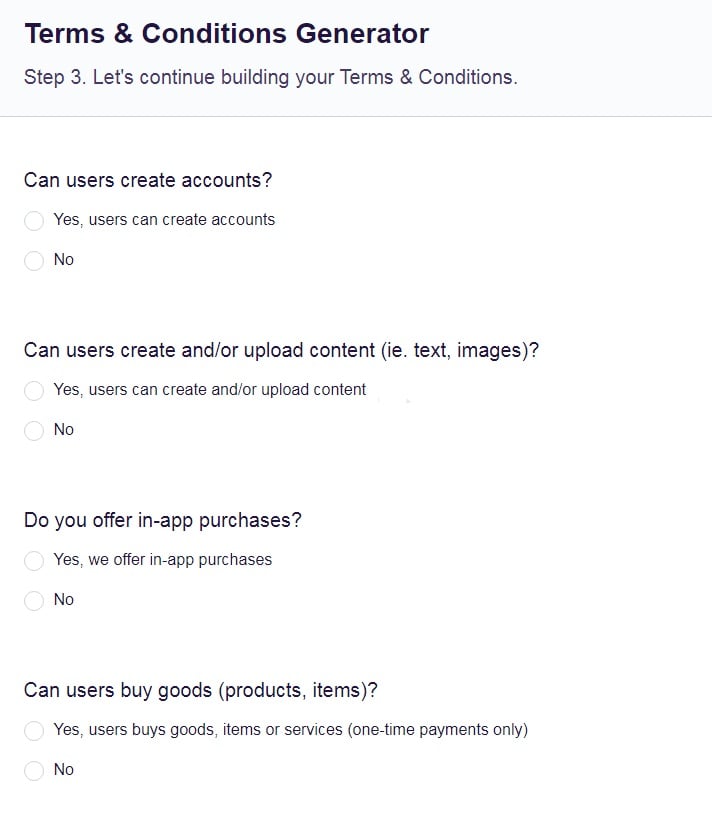
Our Free Terms and Conditions Generator is created to help you generate a professionally drafted agreement that can include various terms and conditions for your site and/or app.
- Start the Free Terms and Conditions Generator from our website.
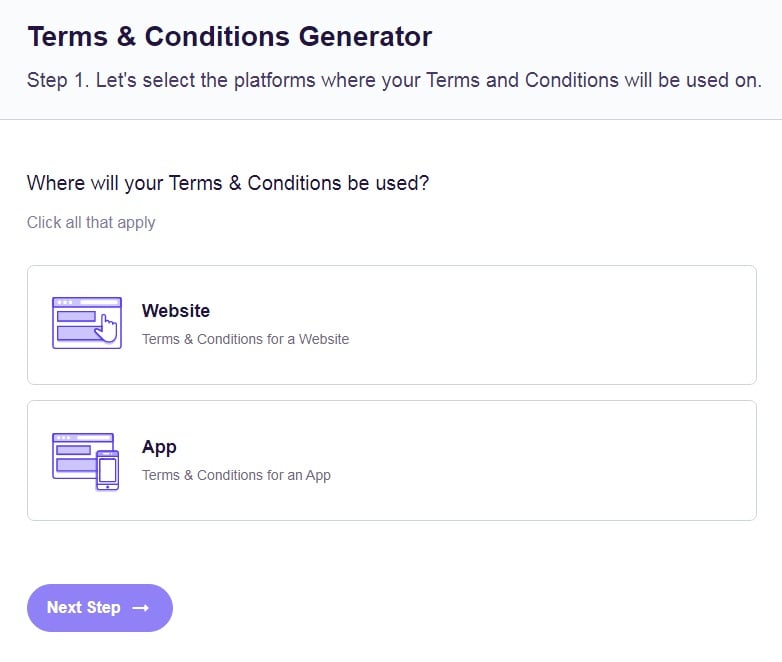
- Select platforms where your Terms and Conditions will be used (website, app or both):
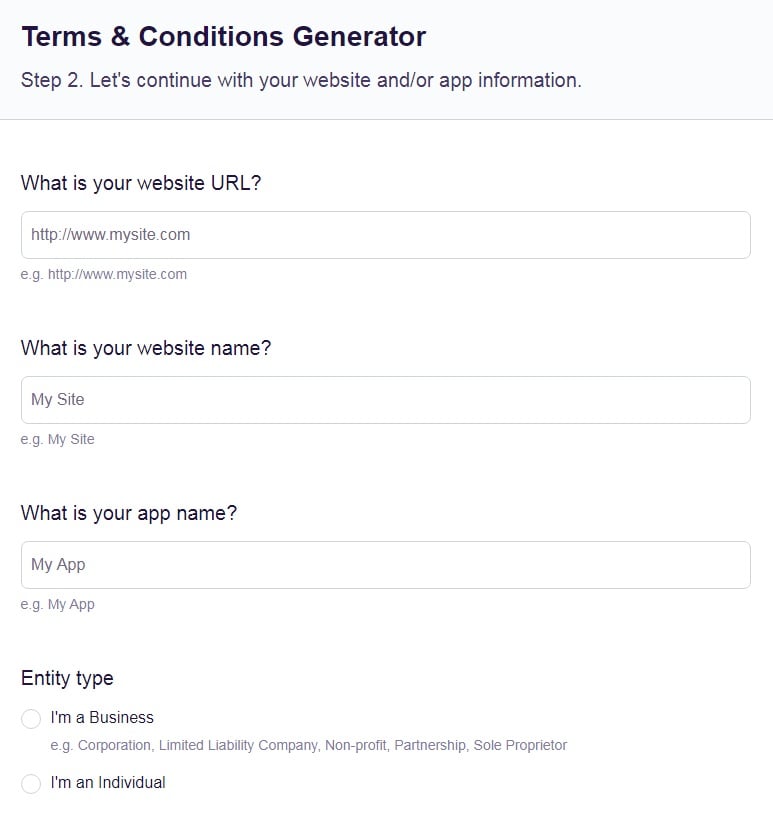
- Answer a few questions about your website or app information:
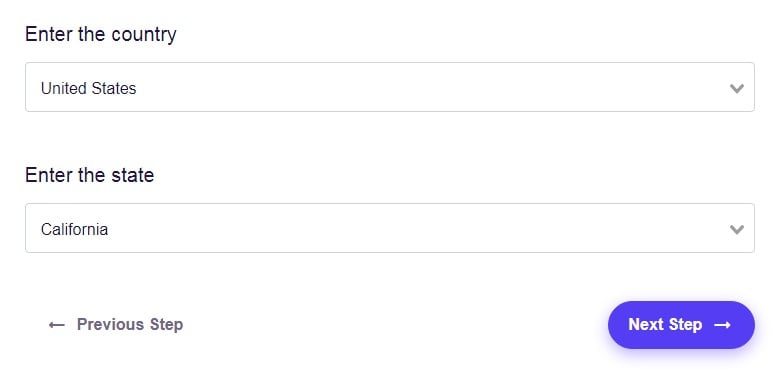
- Select the country:
- Answer a few questions about your business practices:
-
Enter your email address where you'd like to receive the new Free Terms and Conditions and click "Generate":
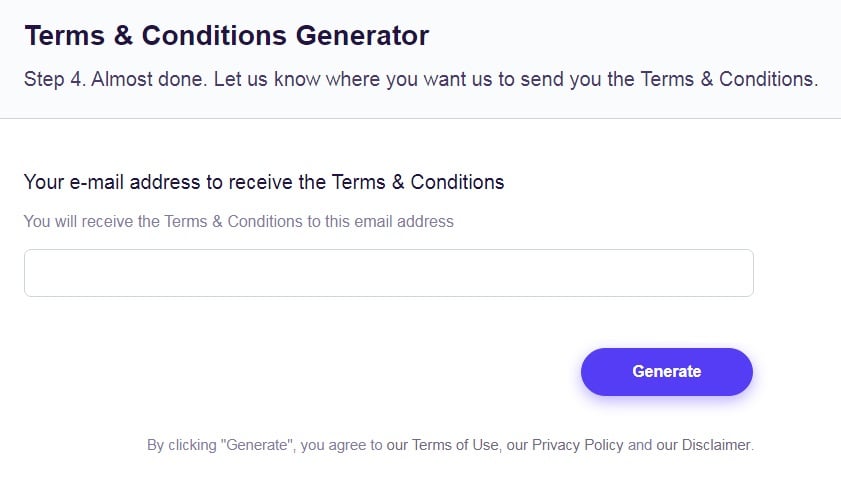
Once generated, you can copy and paste your Free Terms and Conditions agreement on your website or app or link to your hosted Free Terms and Conditions page.
- 1. What Are Terms and Conditions?
- 2. Are Terms and Conditions Legally Enforceable?
- 3. When Will a Court Not Enforce Terms and Conditions?
- 3.1. One Side Didn't Agree
- 3.2. One Side's Agreement Was Not Free and Meaningful
- 3.2.1. Lack of Capacity
- 3.2.2. Misrepresentation and Nondisclosure
- 3.2.3. Duress
- 3.2.4. Undue Influence
- 3.3. Unlawful Terms
- 4. Specific Rules and Systems
- 4.1. United States and Canada
- 4.2. Europe
- 4.3. Brazil
- 5. Does an Unenforceable Term Make the Entire Contract Unenforceable?
- 6. What You Need to Do
- 7. Summary
What Are Terms and Conditions?
Terms and conditions are effectively a set of rules which you and a customer agree to follow. The rules govern your commercial and legal relationship.
Most commonly, your terms and conditions are a single document that applies to all your transactions. They work alongside other documents such as an order form that sets out the specific product and price for a specific purchase. These documents combine to create a contract between you. For clarity, the order form will often note that your terms and conditions apply to the sale.
Are Terms and Conditions Legally Enforceable?
In principle, a court will enforce terms and conditions. While specifics vary, most countries have a legal system that enforces legal agreements made between buyers and sellers. This could be through established convention and precedence or through specific laws.
For example, in the United States the Uniform Commercial Code (which sets out laws that apply nationwide to commercial transactions) says a contract can be legally valid simply by the two sides agreeing the goods and price. However, it also allows for the two sides to agree additional terms and conditions, which in turn will also be legally valid and enforceable.
When Will a Court Not Enforce Terms and Conditions?
Broadly, a court will not enforce terms and conditions in three situations:
- One side did not knowingly and intentionally agree to the terms and conditions.
- One side's agreement was not free and meaningful.
- One or more of the terms is so unfair or one-sided it is not legally valid.
Let's break these down in more detail.
One Side Didn't Agree
In theory it should be obvious that both parties agreed to terms and conditions, but it's not always clear-cut. For example, a business might assume that it's enough to post the terms and conditions somewhere and take it as read that the customer agrees. Alternatively, they might explicitly tell the customer that placing an order constitutes accepting the terms and conditions.
In legal terms, the different approaches are sometimes called "browsewrap" and "clickwrap". It's the concepts that matter rather than the specific names.
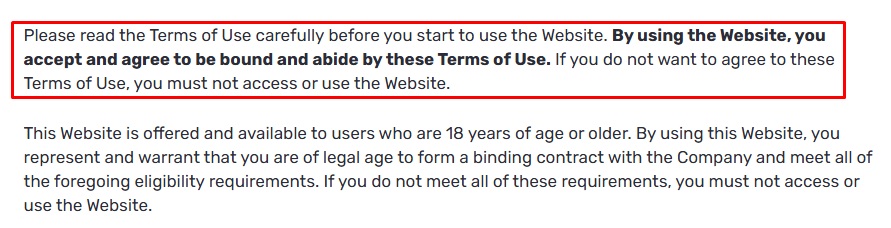
Browsewrap means taking the approach that as long as the terms and conditions are available somewhere, the customer inherently agrees to them when they take an action. This could be placing an order or simply using a website. (The name comes from terms and conditions which say that browsing a website is a sign of agreement. It's a play on "shrinkwrap", an old approach with boxed software where customers couldn't see a license agreement until they had bought the package and removed the shrinkwrap.)
Common Sense Conferences uses a browsewrap approach to its Terms of Use:
Whether the browsewrap approach is adequate to make terms and conditions enforceable is not clearly established in all jurisdictions. Relevant cases include:
- Nguyen v. Barnes & Noble Inc (2014) which ruled Terms of Use posted on a website weren't enforceable because the business couldn't prove the customer had agreed to them.
- Alan Ross Machinery Corp. v. Machinio Corp (2018) which said a term banning people from "scraping" content from a website wasn't enforceable because it didn't make clear that agreeing to the term was a condition of using the website.
- Kanitz v. Rogers Cable Inc, (2002), a Canadian case that ruled posting changes to terms and conditions on a website was enough to make the changes enforceable.
"Clickwrap" means taking the approach that a user must actively indicate they agree to the terms and conditions for them to be enforceable. This covers a range of approaches including:
- Having a clear notice next to an order button that says placing an order means you agree to the terms and conditions.
- Using a tickbox, checkbox, toggle or digital signature to explicitly confirm agreement. (If the terms cover using all or part of the website, this would have to be done before the user could access the relevant pages.)
- Using either of the two previous approaches but either linking to or displaying the terms and conditions at the point of asking for agreement. This removes any doubt that the customer meaningfully agreed to them.
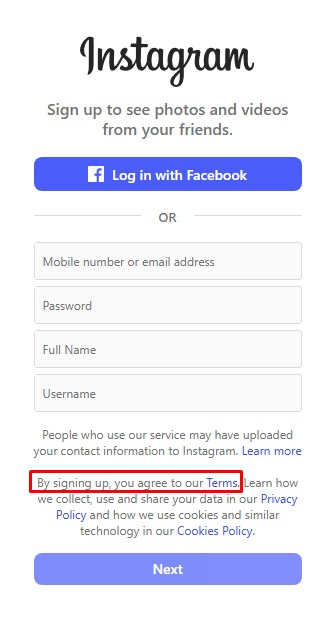
Instagram clearly states that signing up for an account constitutes accepting the terms and conditions. It links to the terms during the sign up process.
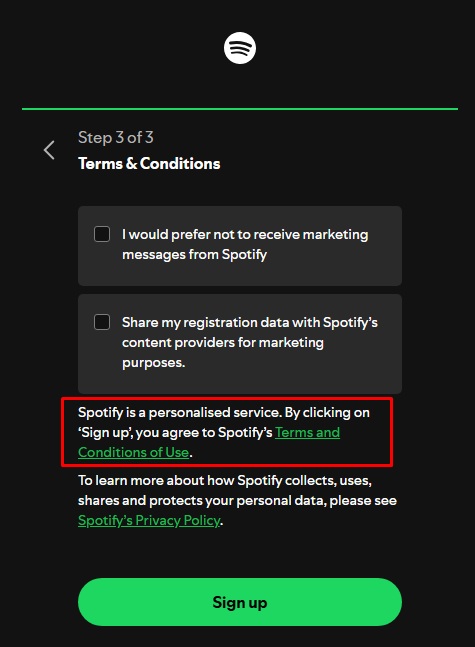
Spotify goes slightly further by explicitly labelling the "Sign up" button as the way to indicate agreement to its terms:
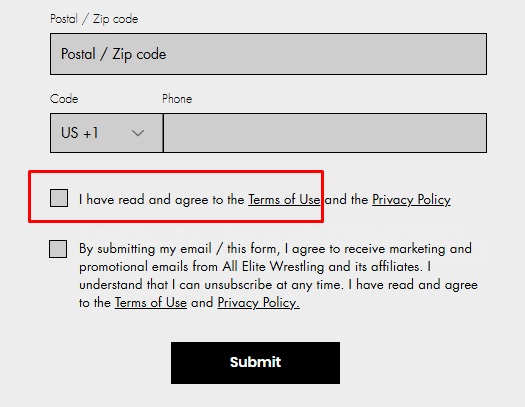
All Elite Wrestling goes even further by requiring users to actively tick a box to explicitly indicate agreement:
One Side's Agreement Was Not Free and Meaningful
Not only must both sides agree to terms and conditions for them to be enforceable, but that agreement must be made freely and meaningfully. These are some of the reasons a court could decide this was not the case:
Lack of Capacity
This means somebody didn't have the ability to properly understand the terms and conditions. Common examples include the person being below a certain age (often 18) or lacking mental capacity. If you are considering letting children be customers, check the law in your state or country. In some cases, a court may enforce terms that benefit a child while declaring terms that favor the business to be unenforceable. Things get even more complicated if somebody lies about their age, so you may need individual legal advice.
Misrepresentation and Nondisclosure
Misrepresentation is not about false statements in the terms and conditions themselves, but about making a false statement (knowingly or unknowingly) that persuades somebody to agree to terms and conditions. For example, you might lie to a customer by falsely saying that if they agree to the terms and conditions, you won't supply one of their rivals. This could make the terms and conditions (and the wider contract) unenforceable.
Nondisclosure is the counterpart to misrepresentation. It means you intentionally failed to tell somebody something that might have changed their decision to agree to the terms and conditions.
Duress
This means somebody felt threatened into signing an agreement, for example because of coercive action by the other party. This should be extremely rare with terms and conditions.
Undue Influence
This is largely about power dynamics and usually involves agreements between two individuals rather than an individual and a business.
Unlawful Terms
Many countries have laws and rules that mean some terms are unenforceable even if both sides make an informed choice to agree to them.
These often include terms in consumer agreements that are extremely one-sided in favor of the business, particularly if they remove or weaken consumer rights that would otherwise apply by default. These can include:
- Terms that disclaim the business's liability for severe harm (such as death or personal injury) caused by its negligence.
- Terms that say the business doesn't have to give a refund even if they fail to supply goods, or if goods don't work as described.
- Terms that let the business impose a disproportionate penalty on the customer for breaching the contract, such as disproportionate cancellation charges.
- Terms that give the business complete freedom to cancel a contract while restricting the customer's ability to do so.
- Terms that let the business change the terms later on without the customer's agreement, particularly when these changes hurt the customer's interests.
In most jurisdictions, a term that requires somebody to do something illegal is inherently unenforceable. The same applies to any term that requires them to do something that is inherently impossible.
Turner Broadcasting System makes clear its liability waiver does not cross into inherently unenforceable territory:

Specific Rules and Systems
As we've noted, while most countries have broadly similar principles on courts enforcing (or not enforcing) contract terms, the way things work in practice can vary. Here's a few key pointers.
United States and Canada
Enforcing terms and conditions in consumer agreements is usually down to the court systems in individual states and provinces. The common principle is that the court decides whether to strike down a term for being "unconscionable", meaning it is so unfair it cannot stand, despite the agreement.
If you do business in Quebec, it's worth noting it has a law that explicitly allows courts to interpret legal agreements based on the clear intentions of the two parties, even if this conflicts with the literal meaning of the words.
Europe
European Union countries, and former member the United Kingdom, have laws on unfair contract terms. This means it's not just a matter of courts refusing to enforce terms and conditions. Instead, consumer agencies have the power to seek an injunction stopping a business from using particular terms.
Brazil
Brazil has a similar system to European Union countries: although a court can decide whether to enforce terms and conditions, consumer agencies can tell businesses to stop using unfair terms. In some cases, the agencies can impose "administrative sanctions" such as fines on the business.
Does an Unenforceable Term Make the Entire Contract Unenforceable?
Usually, a court can take two approaches if it considers a specific term is unenforceable:
- It can declare the entire contract (including the terms and conditions) is unenforceable.
- It can say a particular term is unenforceable but that the rest of the contract and terms and conditions are still valid and that the two sides are bound by them, as if the unenforceable term never existed
Approaches may vary between different courts and jurisdictions. Sometimes the decision is based on which option best favors the customer.
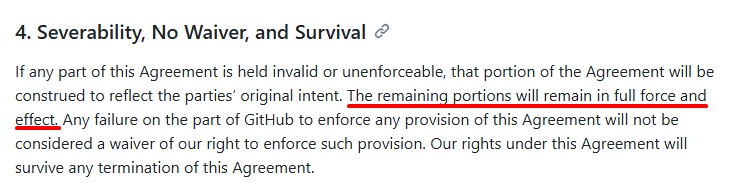
Some businesses protect themselves by using a severability clause. This explicitly sets out that if a court rules one part of an agreement unenforceable, the rest of the agreement remains valid and is treated as if the unenforceable part did not exist. Usually, a court will respect a severability clause given that both sides have agreed to it.
The main exception is if removing the unenforceable term means the remaining agreement is fundamentally changed and no longer reflects the basic principles of what the two sides agreed. For example, it might be clear that one or both parties would never have made the agreement without the term that has been found unenforceable.
Github uses a severability clause:
What You Need to Do
To be confident your terms and conditions will stand up in court, you should:
- Make sure the terms and conditions are readily available to potential users or customers.
- Use a clickwrap approach where the customer explicitly and actively signals they agree to the terms and conditions.
- Make sure you don't create a situation where a customer doesn't make a meaningful and free decision to agree to the terms and conditions.
- Avoid using terms that are considered "unfair" or otherwise unenforceable in your jurisdiction.
- Use a severability clause.
Summary
In principle a court will enforce terms and conditions that form part of your legal agreement with customers. However, you may need to prove the customer actively indicated their agreement and that they did so after having a fair opportunity to review the terms and conditions.
In most jurisdictions, some terms are classed as unfair and are unenforceable, even if the customer willingly agreed to them. Usually these are terms that significantly remove or restrain core consumer rights.
It's possible for a court to declare a term unenforceable but still enforce the rest of the contract as if the offending term does not exist. A severability clause shows that you and the customer want the court to take this approach.