Several laws and regulations restrict the way your business or website can or should interact with minors. An age limitation clause is an important way to protect yourself but will not always be sufficient on its own. Here's what you need to know and do.
Our Free Terms and Conditions Generator is created to help you generate a professionally drafted agreement that can include various terms and conditions for your site and/or app.
- Start the Free Terms and Conditions Generator from our website.
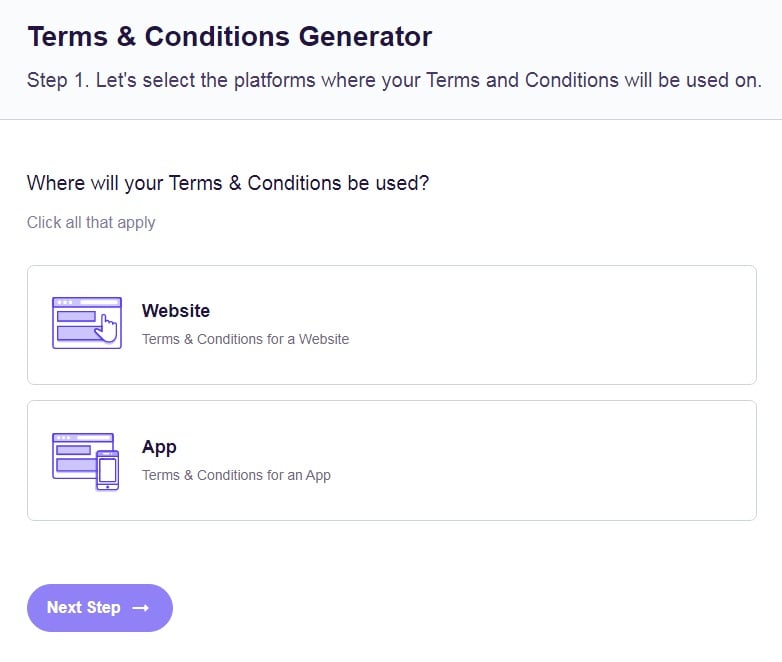
- Select platforms where your Terms and Conditions will be used (website, app or both):
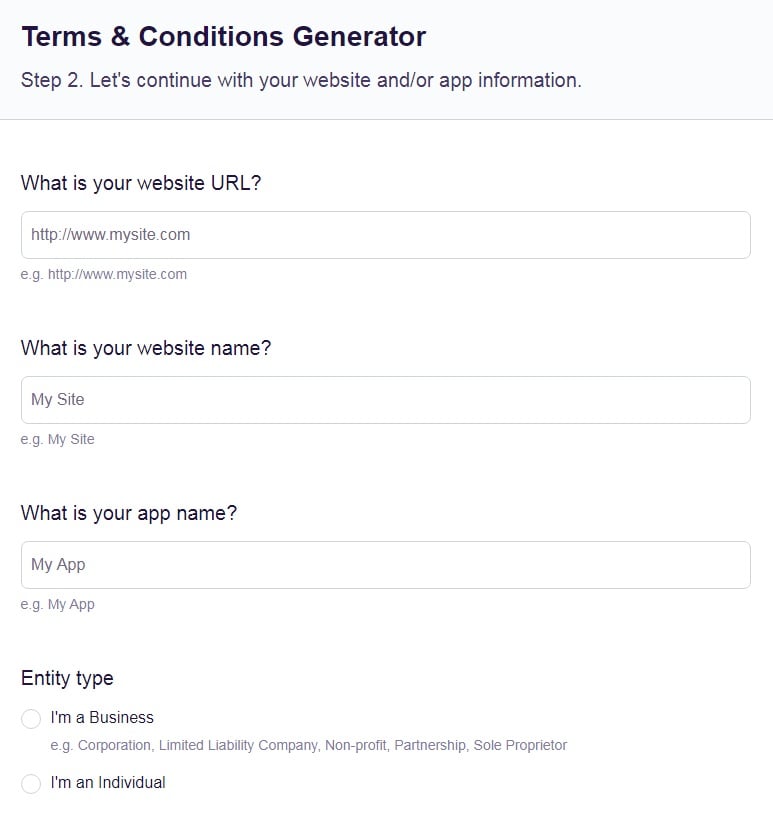
- Answer a few questions about your website or app information:
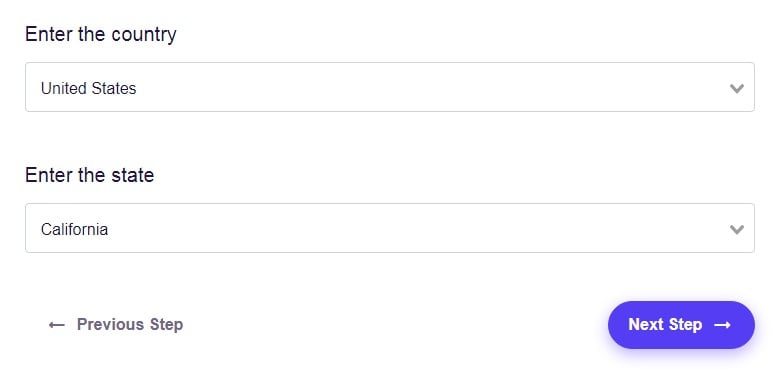
- Select the country:
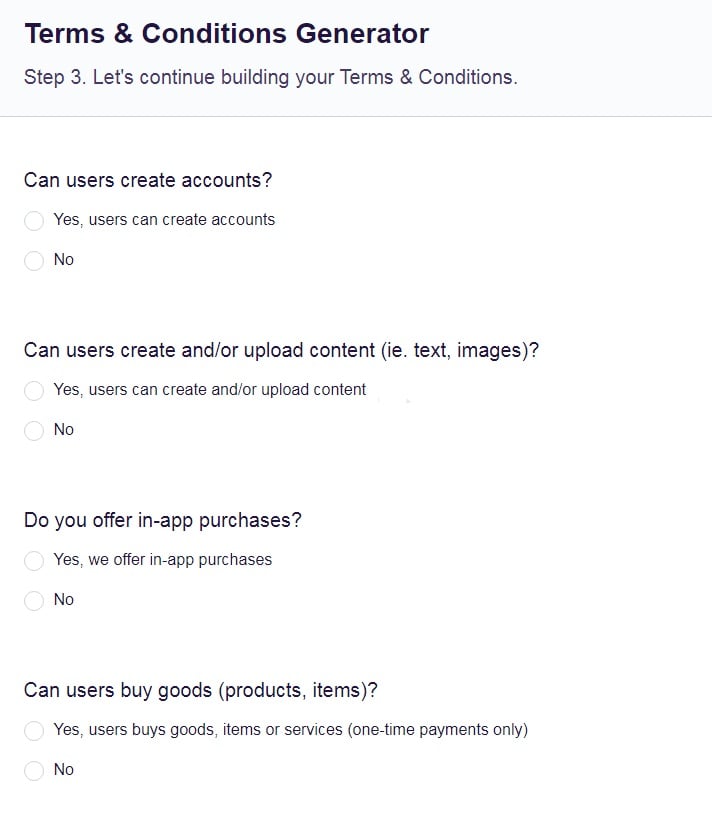
- Answer a few questions about your business practices:
-
Enter your email address where you'd like to receive the new Free Terms and Conditions and click "Generate":
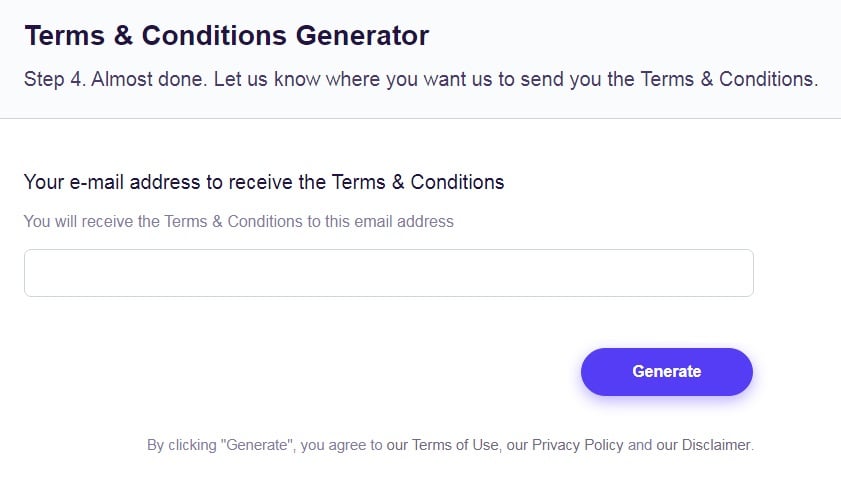
Once generated, you can copy and paste your Free Terms and Conditions agreement on your website or app or link to your hosted Free Terms and Conditions page.
- 1. What Is an Age Limitation Clause?
- 2. Why Would You Use an Age Limitation Clause?
- 3. What Laws Make an Age Limitation Clause Necessary?
- 3.1. Children's Online Privacy Protection Act (The "COPPA Rule")
- 3.2. General Data Protection Regulation (GDPR)
- 3.3. Personal Information Protection and Electronic Documents Act (PIPEDA)
- 3.4. Brazil's General Personal Data Protection Law (LGPD)
- 3.5. Australia's Privacy Act
- 4. What Are the Main Limitations of Using an Age Limitation Clause?
- 4.1. The Minors Contract Paradox
- 4.2. Age Verification
- 5. What To Put in an Age Limitations Clause
- 5.1. Minimum Age
- 5.2. Compliance
- 5.3. Verification
- 5.4. Parental Consent
- 5.5. Consequences and Liability
- 6. Summary
What Is an Age Limitation Clause?
An age limitation clause is part of your Terms and Conditions agreement. The clause tells the reader that people under a certain age either can't use your site or service, or will have limited access.
A Terms and Conditions agreement is a set of rules governing your legal relationship with a customer or user. It can cover selling a product or service but can also cover the way somebody accesses and uses a free service such as a website. In this context it is sometimes called Terms of Use.
Why Would You Use an Age Limitation Clause?
The main reasons to use an age limitation clause are:
- You are legally barred from selling or providing a product or service to people under a certain age. (For example, online stores selling alcohol.)
- You don't want to be accused of promoting inappropriate material or products to children. (For example, a website that reviews tobacco or vape products.)
- Your website or services collects and uses personal data, and you come under data laws which have different rules for minors.
- You want to avoid the risk that you can't enforce your Terms and Conditions on a minor. (As we'll discuss later, this does create a legal dilemma.)
What Laws Make an Age Limitation Clause Necessary?

Beyond laws that make it illegal to supply or sell particular content or products to children, the main legal reason for an age limitation clause is to deal with personal data and privacy laws. We've listed some of the laws which have special rules and restrictions on handling data about minors. This means you may want to ban or restrict people under a certain age using your site or service in a way that means you collect their personal data.
Children's Online Privacy Protection Act (The "COPPA Rule")
This US federal law applies if your site is aimed at children under 13, or you know for certain that children under 13 are providing personal information.
The rule says you must get parental permission to collect personal data of people aged under 13. You must also verify that the person giving the permission has the authority to do so, for example that they are the child's parent or legal guardian.
Many websites avoid the administration of getting this parental consent by simply banning anyone under 13 from creating an account.
General Data Protection Regulation (GDPR)
This law applies if you, the person the data is about, or the data processing itself, is in a European Union country. (Similar or identical measures apply in Iceland, Liechtenstein, Norway and the United Kingdom.)
The law says you cannot get consent for data processing from somebody aged under 16 and must instead get the consent of a parent or guardian. Individual countries can lower this threshold, but only as low as 13.
Note that this age limit only covers consent. You can process data about children if you have another lawful basis such as your legitimate (business) interests outweighing their data rights.
Personal Information Protection and Electronic Documents Act (PIPEDA)
This Canadian law applies to most businesses unless they already come under a province or territory law, or industry-specific regulation that has similar measures. The law usually requires consent to process personal data, though this can be implied consent if the data is not sensitive and the person should reasonably expect the data use.
The law says consent is normally not meaningful (and thus is invalid) from somebody aged under 13. For a child older than 13 the consent process must take into account their maturity: for example, asking them to sign a complex legal agreement might be inadequate.
Brazil's General Personal Data Protection Law (LGPD)
This law works in a similar way to Europe's GDPR. It doesn't have a specific age limit. However, its interaction with wider laws in Brazil mean you will need parental consent for a child aged under 12. For children aged 12-18, consent from the child may be valid as long as the processing is done in a way that pursues their best interests and where no data is collected beyond what is strictly necessary.
Australia's Privacy Act
This law does not set an age of consent. Instead, it says children can consent if the individual is mature enough to make an informed decision. If it's not possible to assess an individual's capacity, an acceptable rule of thumb is that anyone over 15 can consent.
What Are the Main Limitations of Using an Age Limitation Clause?

An age limitation clause may be less effective than you think in two main circumstances.
The Minors Contract Paradox
Having an age limitation clause can create a legal paradox when it comes to enforcing your Terms and Conditions agreement.
You may have a clause that bans minors from using your service or buying a product. In principle that makes sense because many countries and jurisdictions say minors can't legally agree to a contract (which includes your Terms and Conditions agreement). The age limitation clause reduces the risk that you will be unable to enforce your terms and conditions and thus lose some of your legal protection.
The problem is that a lawyer could argue that the age limitation clause is itself unenforceable because a minor can't legally agree to it.
How this paradox is resolved in practice varies between jurisdictions. In some cases, the contract is voidable by the minor, meaning they can enforce its measures on you, but you can't enforce it on them.
However, in other jurisdictions, a court may enforce a contract if a minor has misrepresented their age. In this situation an age limitation clause can be helpful. It means you can argue the minor knew that by using your site or making a purchase, they were inherently (and falsely) claiming to be above the relevant age.
Age Verification
Some laws, for example those banning sales of products or access to adult material, don't let you simply take somebody's word that they are old enough to legally make a purchase or access material. You can't simply rely on somebody having agreed to your Terms and Conditions, including the age limitations clause. Instead such laws often require specific verification of somebody's age, for example by checking a proof of age and identity documents.
What To Put in an Age Limitations Clause

These are some key points to include in your age limitations clause (if relevant to your business) along with some examples of how to do it.
Minimum Age
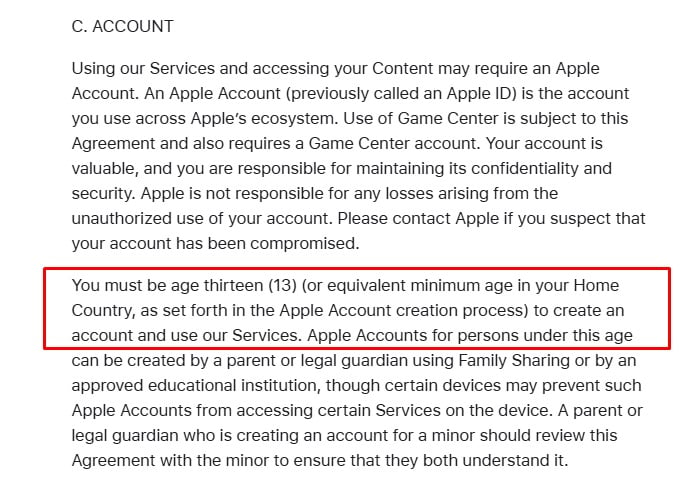
Clearly detail any minimum ages that apply to using part or all of your service or placing an order.
Apple sets out a minimum age of 13:
Compliance
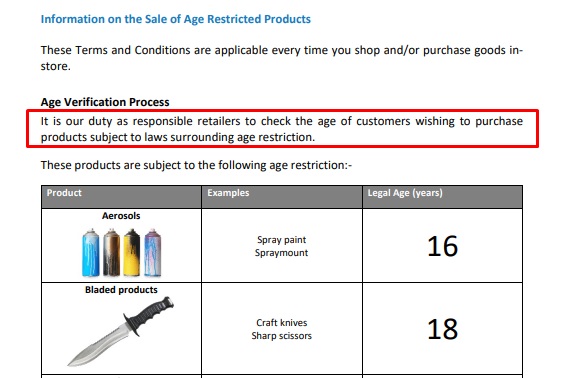
State if and how your age limitations clause helps you comply with specific laws. This has a dual-purpose: it shows you are taking the law seriously (and could help if you are accused of non-compliance) and it stresses the importance of the age restriction to users and customers.
UOE makes clear its age restrictions are there to comply with the law rather than simply being a policy choice:
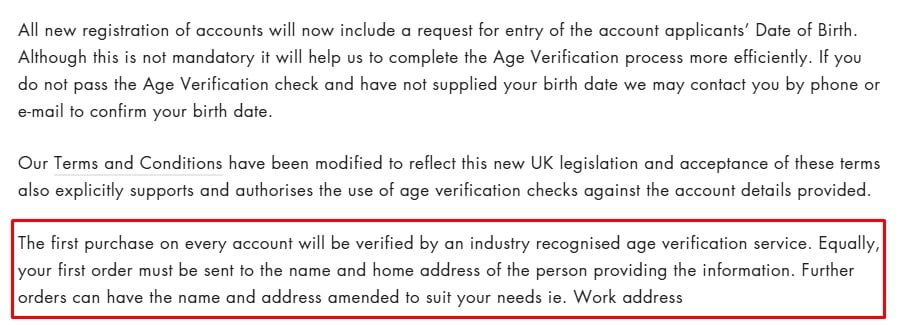
Verification
Say if and how you verify somebody's (claimed) age, including any technical measures.
No Match, an e-cigarette seller, details its age verification procedures:
Parental Consent
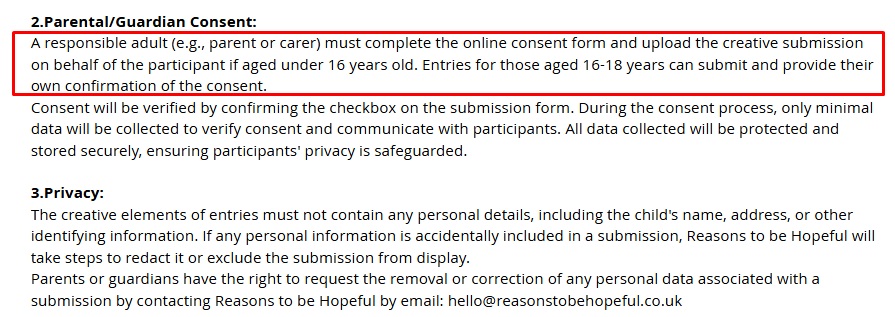
Say if and when you require parental consent in place of a child's consent, for example to use a site, access particular material or provide personal data. Detail any specific measures you use to verify this consent is valid.
Reasons to be Hopeful addresses when parental consent is and is not needed for entrants to a competition:
Consequences and Liability
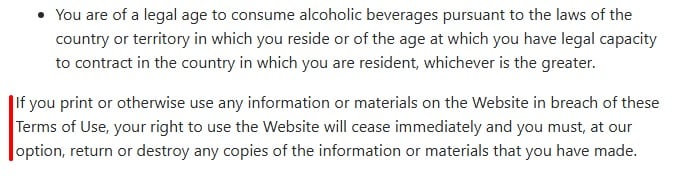
Say what happens if somebody misrepresents their age. This could include you having the immediate right to cancel an order, close an account or block access to a member section, even if doing so may harm the person (for example by them losing access to created content.)
Brown Forman (an alcohol producer) makes being of legal age a condition of using the site and lists a consequence of breaching this condition:
You could also disclaim liability for any harm caused by somebody making false claims about their age. Make sure such a disclaimer is lawful to use in your jurisdiction.
Summary
An age limitation clause helps you comply with legal restrictions on serving minors, allowing them access to content, or processing their personal data. At a minimum, an age limitation clause will show you take legal restrictions seriously and will stress their importance to people using your site or service.
An age restriction clause is usually worth having, but don't rely on it to cover all circumstances. It may be difficult to enforce if a minor is not legally allowed to agree to the wider terms and conditions containing the clause. It may also be insufficient to meet your legal obligations: instead you may need to actively verify somebody's age or legal capacity to consent.